Mridanga class #1
Ready to start your journey with one of the most revered percussion instruments? Our Mridanga Drum Course covers essential techniques, from basics to more advanced skills, focusing on its role in Indian music and kirtan.
Whether you’re new or experienced, the course offers clear lessons and practice routines to help you play with precision, rhythm, and expression.
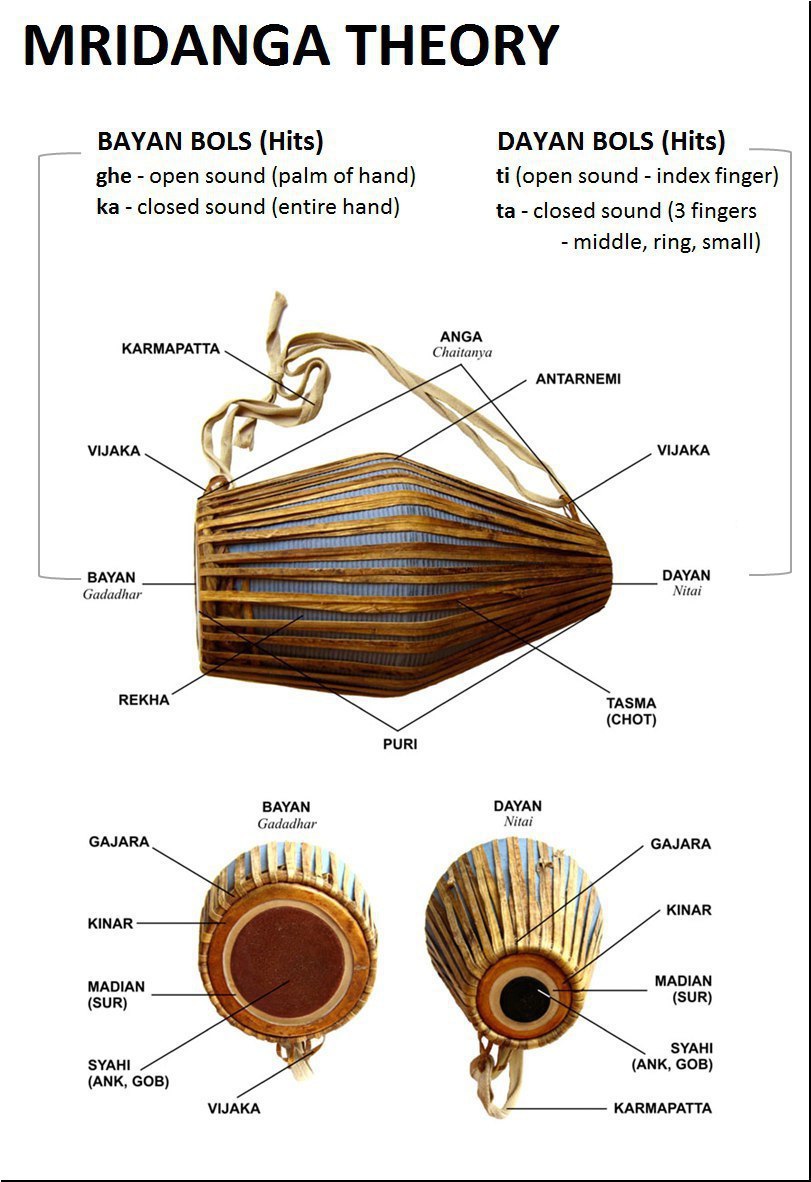
Adjusting the sound of the Bayan
The drum will react to the environment it is left in. If the room is dry and hot, the Bayan skin will tighten and the bass sound will seem high pitched. The video below shows you how to fix it…
Ideal Sitting Position for Playing the Mridunga
Proper sitting posture is key to playing the Mridanga comfortably and effectively. It helps prevent strain and ensures optimal sound. Here’s how to sit correctly when playing:
1. Posture:
• Sit on a firm surface like a cushion or mat, keeping hips slightly above the knees.
• Keep your back straight for better control and balance.
• Relax your shoulders—don’t raise or droop them.
2. Leg Position:
• Sit cross-legged (Padmasana or Sukhasana), or with bent legs and feet flat if more comfortable.
• Keep legs relaxed and slightly apart if on a cushion.
• Avoid knee strain; legs should feel stable and at ease.
3. Mridanga Placement:
• Position the Mridanga with the right head (Thoppi) on your right and left (Bayan) on your left.
• Place it slightly left of centre, allowing natural arm movement.
• The drum should rest on the ground or soft surface, aligned with your torso for easy reach.