
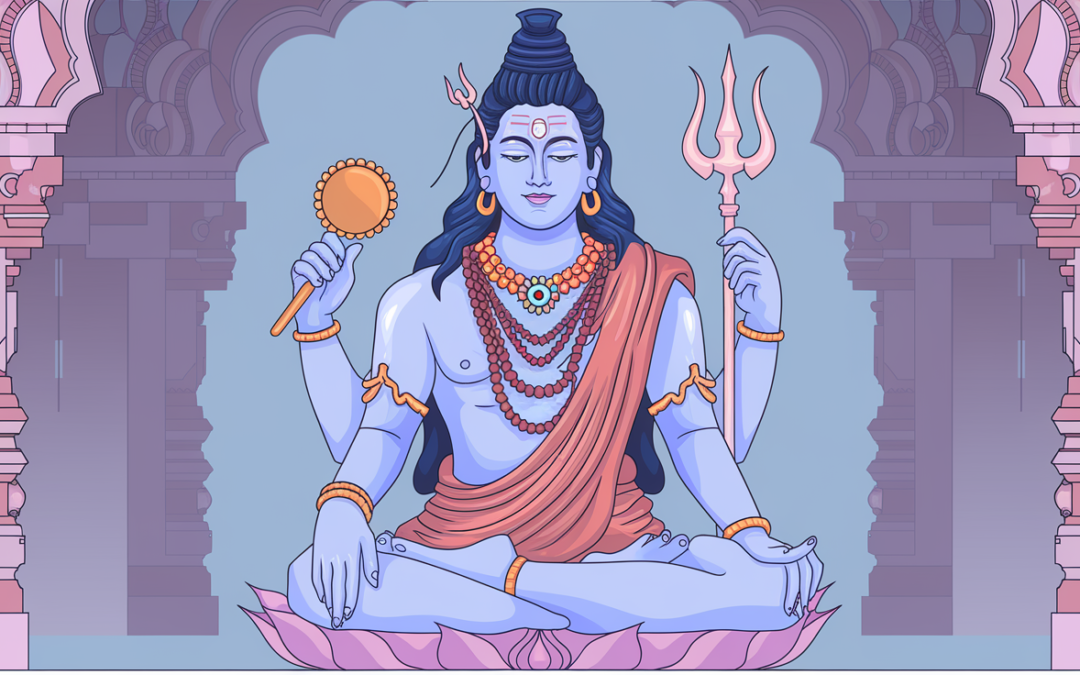
Shiva, a principal deity in Hinduism, represents transformation, destruction, and renewal. As part of the divine trinity called the Trimurti—alongside Brahma, the creator, and Vishnu, the preserver—Shiva plays a vital role. He is not merely a figure of destruction. Instead, he symbolises life’s cycles, where every ending leads to a new beginning.
The Many Facets of Shiva
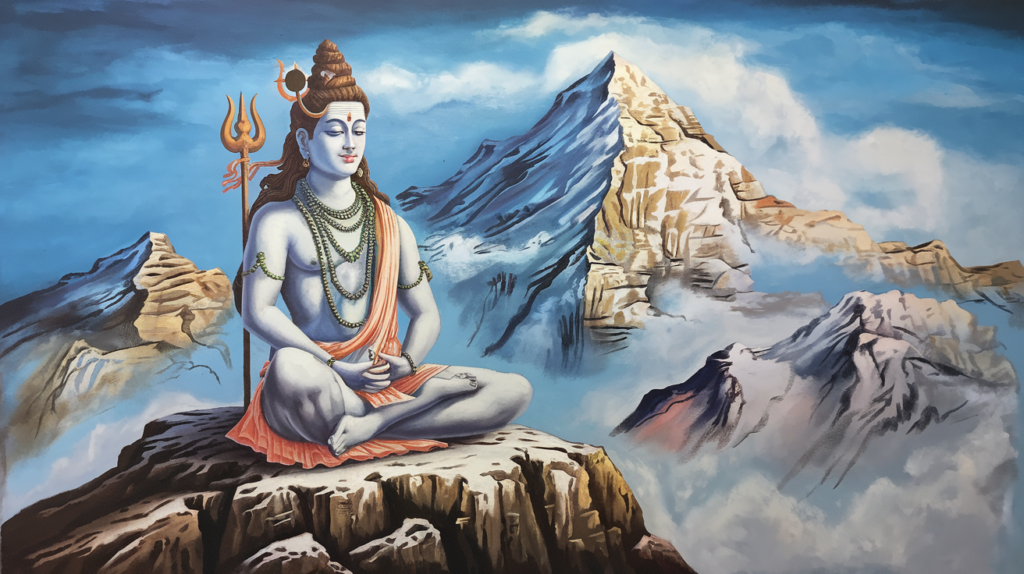
He is often depicted in a meditative state, seated on Mount Kailash, his divine abode. His third eye represents wisdom and inner vision, while the crescent moon on his hair signifies control and serenity. The river Ganga flows from his matted locks, illustrating the purifying power of divine grace. Additionally, the serpent Vasuki coiled around his neck reflects his mastery over primal energy. The ashes on his body remind devotees of life’s impermanence.
On the other hand, Shiva’s fierce form, Rudra, embodies destruction and chaos. Yet, this destruction clears the way for renewal. This duality—calm ascetic and dynamic force—makes Him an incredibly profound deity.
The Symbolism of Nataraja: The Cosmic Dancer
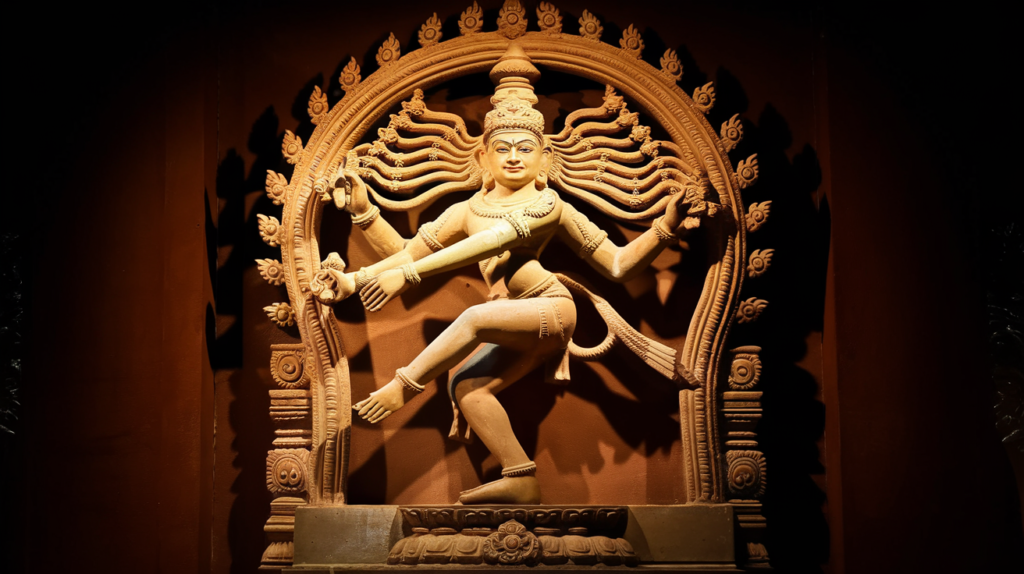
One of Shiva’s most iconic depictions is as Nataraja, the Lord of Dance. In this form, he performs the cosmic dance of creation, preservation, and destruction. Known as Tandava, the dance symbolises the universe’s eternal rhythm. Encircled by flames, Shiva dances atop a demon, Apasmara, who represents ignorance and ego. His raised hand, in a blessing gesture, assures devotees of protection during life’s challenges.
Devotion to Mahadev
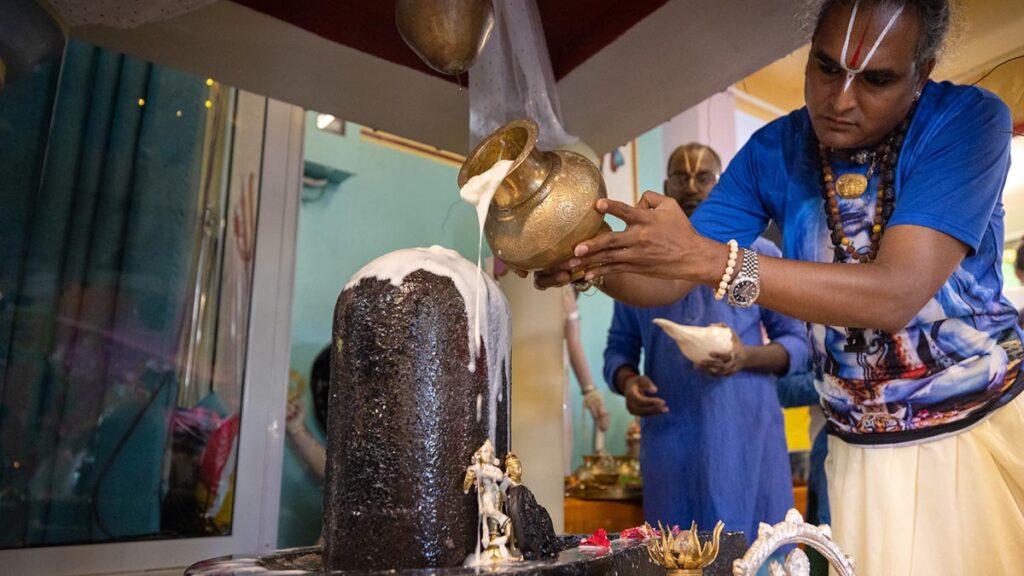
Shiva is a beloved deity, especially celebrated during Maha Shivaratri, the Great Night of Shiva. On this sacred day, devotees fast, offer prayers, and chant his mantra, Om Namah Shivaya. This phrase means “I bow to Shiva.” Not only is it a homage, but it also serves as a meditative tool for aligning with the divine.
Many temples across India and beyond are dedicated to Him. Some of the most famous include Kashi Vishwanath in Varanasi, Kedarnath in the Himalayas, and Chidambaram in Tamil Nadu. Devotees often worship Him in the form of the lingam (as above), a symbol of cosmic energy and creative power.
The Relevance of Shiva Today
Shiva’s teachings extend beyond religion, offering wisdom that applies to modern life. He embodies balance, the destruction of ego, and the acceptance of impermanence. These lessons encourage introspection and personal growth. As the ultimate guru, Shiva guides seekers toward liberation.
Through meditation, his fierce dance, or his compassion, Shiva inspires change. He reminds us to let go of the past and embrace new possibilities. Every ending becomes a doorway to transformation.
In Shiva’s energy, we find not only destruction but also the promise of renewal. Letting go creates space for growth and a fresh start.