
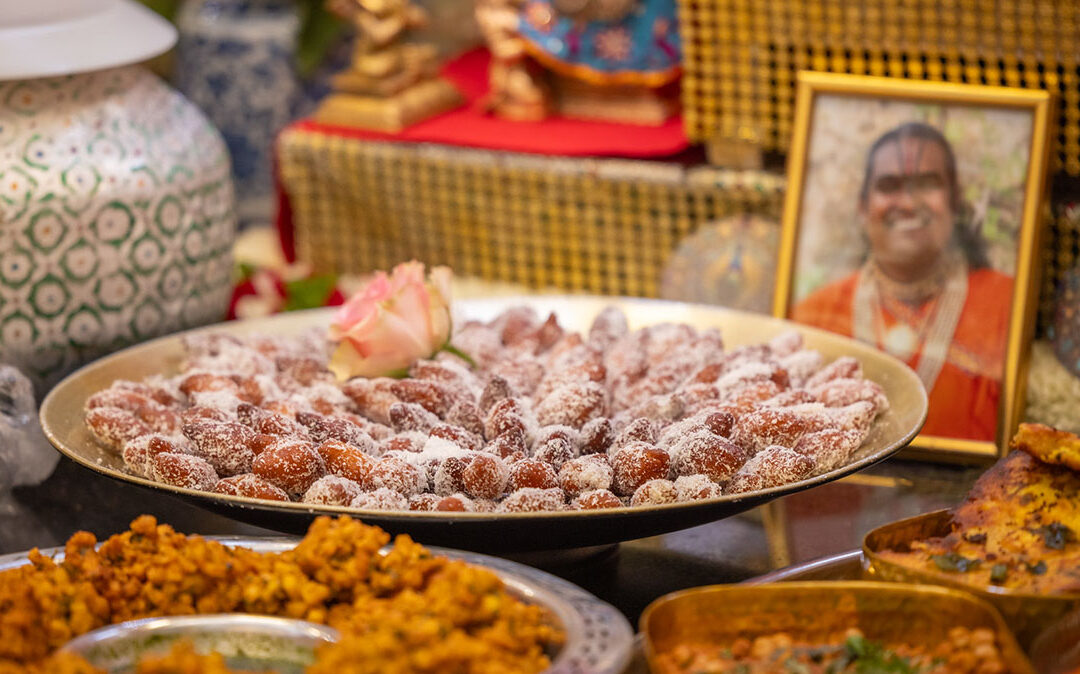
In Hinduism, prasad is much more than just food—it is a sacred offering, a tangible form of divine grace received after being presented to the deities during a puja (worship). The concept of prasad highlights the intimate relationship between the devotee and the Divine, where food prepared with love and devotion is first offered to God before being distributed among the worshippers.
How Prasad is Offered in a Hindu Puja
During a Hindu puja, offerings are made as a gesture of devotion and gratitude. The process begins with the preparation of food, which is often done with a sense of purity and reverence. The food is then placed before the deity as part of the ritual, accompanied by prayers, mantras, and sometimes incense or flowers.
The offering is considered ‘naivedya’ until it is formally presented to the deity. Once it has been blessed through the puja, it becomes ‘prasad’—now infused with divine energy. In temples, the priest performs an arati, waving a lit lamp before the deity and sometimes offering water or sandalwood paste before distributing the sanctified food to devotees. At home, the practice follows a similar approach, with family members sharing the prasad together.
The Effects of Prasad on a Spiritual Seeker
Prasad is believed to carry the divine vibrations of the deity it has been offered to, making it spiritually potent. For a seeker on the spiritual path, consuming prasad is not just an act of nourishment but a way of receiving divine blessings. It is said to purify the mind and heart, helping to remove ego and cultivate humility.
Hindu scriptures and saints often speak of prasad as a way to connect with the Divine beyond intellectual understanding. Eating prasad with faith and reverence allows a devotee to experience the grace of God in a direct and personal way. It also reminds seekers that all sustenance ultimately comes from the Divine, reinforcing an attitude of gratitude and surrender.
Types of Food That Can Be Offered
The type of food offered as prasad varies based on regional traditions, specific deities, and the occasion. However, some common offerings include:
- Fruits – Bananas, coconuts, mangoes, and other seasonal fruits are frequently used.
- Sweets – Items like ladoos, modaks, kheer (sweet rice pudding), and halwa are widely prepared as offerings.
- Cooked Foods – Some deities are offered full meals, including rice, dal, vegetables, and chapatis.
- Milk-Based Offerings – Butter, curd, and ghee (clarified butter) play an important role, especially in Vaishnava traditions.
- Dry Foods – Nuts, jaggery, and puffed rice are often presented as simple, easily distributed prasad.
- Tulsi Leaves – Particularly in Vishnu and Krishna worship, the sacred Tulsi leaf is placed on prasad before offering it.
Certain restrictions apply based on the deity being worshipped; for instance, offerings to Lord Shiva are often sattvic (pure), while Devi (Goddess) worship may include richer offerings.
Summary
Prasad is a sacred part of Hindu worship, signifying divine grace through food. It is first offered to the deity during puja, where it is blessed and then shared with devotees. For spiritual seekers, consuming prasad fosters humility, gratitude, and a deeper connection with the Divine. A variety of foods, including fruits, sweets, cooked meals, and milk-based offerings, can be presented as prasad. Ultimately, this act of devotion transforms ordinary food into something spiritually uplifting, reminding us of the ever-present grace of God.