
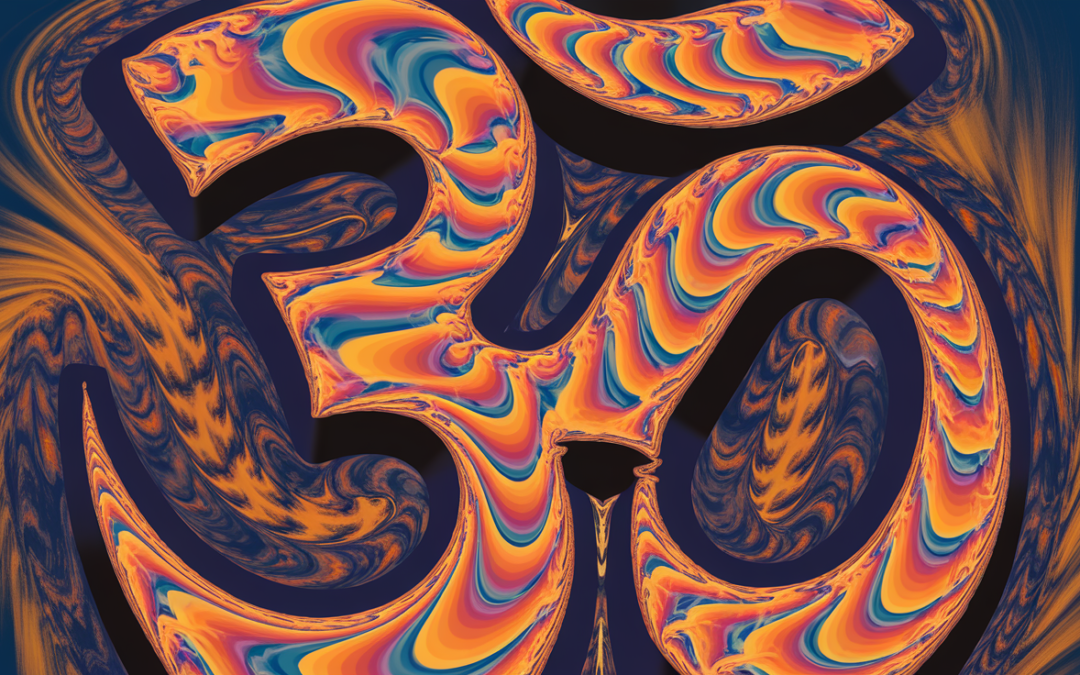
In Hinduism, the syllable OM (ऊं) holds unparalleled significance as the primal sound of the universe. Known as the “Pranava,” it is not merely a syllable but a profound symbol encapsulating the essence of existence. It represents the ultimate reality, the divine, and the interconnectedness of all life.
Origins and Meaning
The Vedic scriptures, which are among the oldest religious texts in human history, describe the origins of OM. It signifies the sound from which the universe originated, a vibration that permeates all of creation. Moreover, the Mandukya Upanishad, one of the principal Upanishads, delves deeply into the meaning of the syllable. According to this text, OM represents the four states of consciousness:
- Waking (Vaishvanara) — The conscious experience of the external world.
- Dreaming (Taijasa) — The inward experience of the subtle world.
- Deep Sleep (Prajna) — The state of undifferentiated consciousness.
- Turiya — The transcendent state beyond waking, dreaming, and deep sleep; the ultimate reality.
These states correspond to the letters A, U, and M, while the silence following the utterance of mantra symbolises Turiya. Consequently, OM becomes a representation of both the individual and universal journey through consciousness.
OM in Daily Practice
Hindus incorporate OM into various aspects of their spiritual practice. For instance, practitioners chant it at the beginning and end of prayers, mantras, and rituals. They believe the sound aligns the mind, body, and soul, preparing them for deeper states of meditation. Additionally, many chant OM as a standalone mantra, using it to connect with the divine vibration of the cosmos. Therefore, OM serves as a versatile and powerful spiritual tool.
Symbolism in Yoga and Meditation
In yoga and meditation, OM plays a vital role in harmonising energy. Specifically, chanting OM resonates with the universe’s frequency, fostering a sense of unity and peace. This practice not only helps focus the mind but also quietens distractions. As a result, it becomes an indispensable tool for those seeking inner tranquillity.
The Universal Symbol
Beyond its phonetic significance, OM is visually represented by a sacred symbol. This symbol is rich in meaning, with its curves, semicircle, and dot embodying the different states of consciousness and the illusion of the material world. Therefore, it reminds practitioners of the spiritual journey towards enlightenment and the ultimate unity with the divine.
OM and the Cosmos
The connection between the syllable and the cosmos goes beyond metaphor. For example, physicists have observed that vibrations form the foundation of the universe’s structure. This observation aligns with the ancient belief that OM is the cosmic sound, a universal vibration underpinning all existence. By chanting the mantra, individuals align themselves with the rhythm of the cosmos. Consequently, they foster a sense of harmony with the universe.
A Summary
The syllable is far more than a sound or a symbol; it is a profound spiritual cornerstone in Hinduism. It encapsulates the essence of existence, the journey of consciousness, and the unity of all life. Through chanting, meditation, or contemplation, OM acts as a bridge to the divine, reminding everyone of their place in the cosmic order. Ultimately, embracing the power of OM opens the path to spiritual awakening and harmony.