
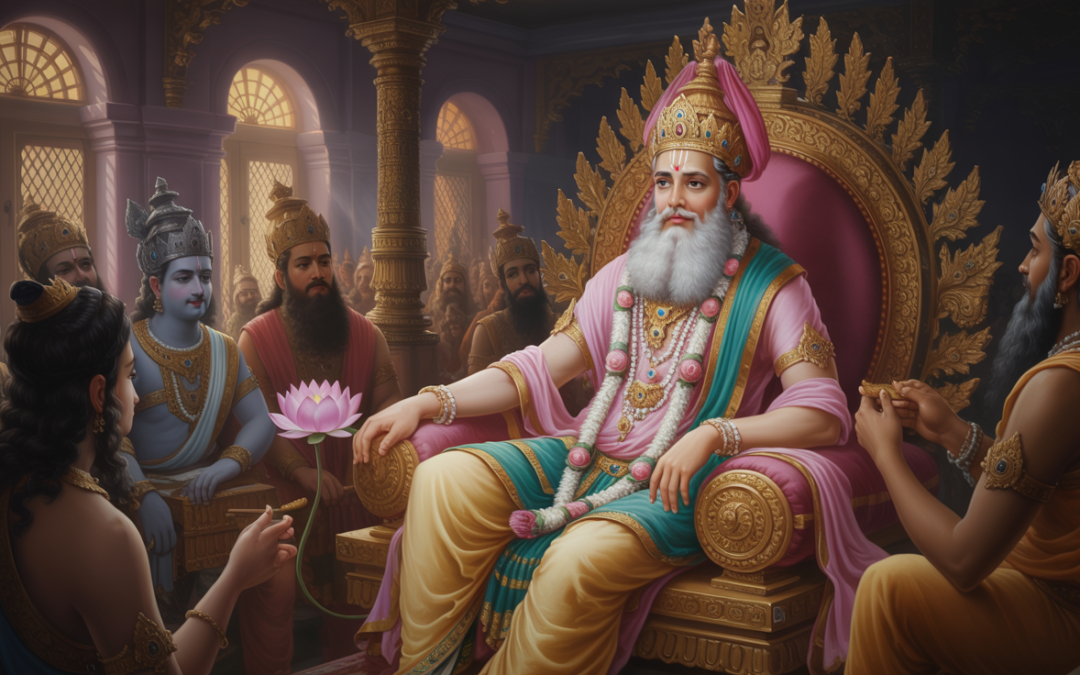
Canto 9 of the Shrimad Bhagavatam, known as the Dynasties of the Sons of Manu, explores the royal lineages that shaped the world’s history, particularly those connected to the sun and moon dynasties. Though much of the canto may appear to be a list of names and genealogies, beneath the surface it contains profound spiritual insights on duty, character, devotion and the responsibilities we inherit.
This canto also includes inspiring accounts of legendary figures such as King Ambarisha, Lord Rama, and others who demonstrated extraordinary discipline, humility and adherence to dharma in the face of hardship. These narratives are not just historical or mythological records; they are mirrors for our own lives, pointing us toward living with integrity and higher purpose.
Key Teachings from Canto 9 of the Shrimad Bhagavatam
1. Our actions affect generations
The stories of dynasties serve as a reminder that every action has consequences, not just for ourselves but for those who come after us. The good or bad decisions of kings influenced entire nations and shaped their descendants’ futures.
2. Dharma is more important than power
Rulers who upheld dharma, such as Ambarisha and Rama, are remembered with reverence, while those who strayed brought chaos. The real strength of a leader was measured not by conquest but by moral clarity and self-restraint.
3. Devotion protects and purifies
King Ambarisha’s unwavering devotion to Lord Vishnu protected him even when the sage Durvasa tried to curse him. His story teaches that pure devotion can shield us from harm and transform hostility into peace.
4. Renunciation can be internal
Some kings gave up their kingdoms to pursue spiritual life, while others remained active rulers but lived with inner detachment. The path to liberation does not always require external renunciation, but it does ask for inner clarity and surrender.
Everyday Applications of Canto 9 of the Shrimad Bhagavatam
The stories and values in this canto are deeply applicable in daily life, whether in personal relationships, work or spiritual growth.
1. Reflect on your legacy
We may not be monarchs, but we all leave a legacy – through our words, actions and how we treat others. Ask yourself what kind of example you are setting, especially for younger people or those who look to you for guidance.
2. Prioritise values over ambition
It is natural to want success, but when ambition compromises integrity, the result is inner conflict. Let your decisions be guided by your principles, not just the prospect of gain or approval.
3. Make time for spiritual practice
King Ambarisha was a ruler with endless responsibilities, yet he dedicated time each day to worship and remembrance of God. If he could find the time, so can we. A few moments each morning or evening spent in prayer, chanting or reflection can help anchor the mind.
4. Respond with calm, not ego
When challenged or insulted, Ambarisha remained composed and respectful. The ability to remain peaceful rather than reactive is a sign of inner maturity. Practise patience during tense moments, and try not to take things personally.
5. Honour your responsibilities
Many characters in this canto took their duties seriously – whether as rulers, sons, or seekers. While modern life may be more complex, the lesson remains the same: fulfil your responsibilities with sincerity, even when they are inconvenient or thankless.
6. Balance action with detachment
Even while performing worldly duties, the wise kings of Canto 9 lived with an attitude of surrender. This can be practised today by offering your actions to a higher purpose and not being overly attached to the results.
Summary Podcast
Canto 9 of the Shrimad Bhagavatam may at first seem like a formal record of kings and families, but its teachings run deep. It shows that a life lived with discipline, devotion and a sense of duty brings lasting value, both spiritually and socially. In a world often focused on quick success and short-term rewards, these stories remind us of the importance of living meaningfully and leaving behind something noble.
Try bringing even one principle from this canto into your daily life – whether it is acting with integrity, staying devoted in busy times, or responding with patience when tested. In doing so, you connect your present life to a timeless stream of wisdom that continues to guide seekers of truth across generations.