
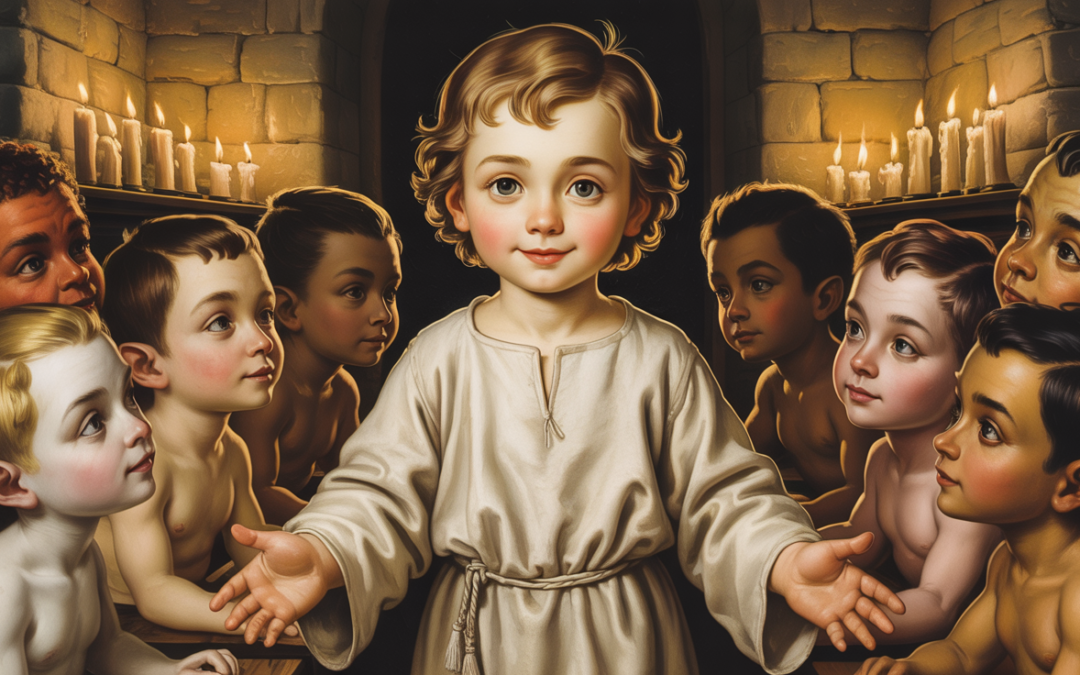
Canto 7 of the Shrimad Bhagavatam offers one of the most striking narratives in the entire scripture. It revolves around the intense conflict between the powerful demon king Hiranyakashipu and his saintly son Prahlada. This story, rich with philosophical meaning and moral lessons, explores the nature of true devotion, the perils of ego, and the protective power of the Supreme.
Unlike mere mythological accounts, this canto serves as a mirror to our own lives. The characters and their behaviours symbolise tendencies within each of us, allowing us to reflect deeply and draw meaningful conclusions to improve our daily life.
The main morals of Canto 7 of the Shrimad Bhagavatam
1. Devotion transcends circumstance
Prahlada was born in a family of demons, yet his heart remained fixed on the Supreme Lord, Narayana. He was surrounded by negativity, hatred and material ambition, but remained untouched. His inner conviction shows that bhakti (devotion) is not limited by one’s background, upbringing, or surroundings. This teaches us that regardless of our current environment or past, we can choose a spiritual path and live with integrity and devotion.
2. Ego leads to destruction
Hiranyakashipu represents the inflated ego that believes it is invincible. He was blinded by pride in his power, wealth and control. His attempt to override the will of the Supreme and force others to worship him only led to his downfall. This warns us of the dangers of arrogance. When we act as though we are the centre of the universe, we eventually face collapse. True strength lies in humility, not domination.
3. The Lord protects sincere devotees
Despite severe punishments, threats and even attempts on his life, Prahlada remained unshaken in his faith. Lord Narasimha eventually appeared from a pillar to protect him and destroy Hiranyakashipu, fulfilling the divine promise that the Lord always supports and protects His true devotees. This teaches us to maintain faith even in difficult times, trusting that divine help often comes in unexpected ways.
4. The importance of early spiritual education
Prahlada was taught spiritual knowledge even while in the womb, and despite his father’s efforts to indoctrinate him with demonic philosophy, he held on to what he had learned. This highlights the value of instilling spiritual and moral values early in life. It is easier to live righteously when one’s foundation is built on truth and compassion from a young age.
5. Real happiness lies beyond material enjoyment
Hiranyakashipu had everything that people normally desire — wealth, power, followers, and worldly pleasures — but he was constantly restless, angry and dissatisfied. Prahlada, on the other hand, had nothing but remained peaceful and joyful because of his devotion. This demonstrates that true happiness does not come from what we own, but from who we are within.
Applying the teachings of Canto 7 in daily life
Many of us face challenges where our values are tested. We may work in environments filled with competition, pride and greed. Like Prahlada, we can learn to stay grounded in our principles, choosing peace over conflict and humility over ego.
When faced with difficult relationships, especially with family members or authority figures who do not share our values, we can practise patience and faith, just as Prahlada did. Instead of reacting with anger, we can respond with inner strength and clarity.
We can also examine our own lives for signs of Hiranyakashipu’s tendencies. Do we try to control others? Do we believe we are the source of our own success? Recognising these patterns and replacing them with gratitude and surrender can bring more harmony and contentment.
Teaching spiritual values to children or younger generations is another practical lesson. Even simple discussions about kindness, truth and the nature of the soul can have a lasting impact.
Lastly, this canto reminds us that challenges in life are not punishments, but opportunities to grow spiritually. When we rely on the divine and commit to dharma, we receive protection and guidance in mysterious and meaningful ways.
A Podcast Summary of Canto 7 of the Shrimad Bhagavatam
Canto 7 of the Shrimad Bhagavatam tells a timeless story of the clash between ego and devotion, personified by Hiranyakashipu and Prahlada. The central message is clear: devotion to the Supreme and adherence to truth will ultimately triumph over arrogance and violence. This canto teaches us to cultivate inner strength, humility, and unwavering faith, no matter what life throws at us.
In a world full of distractions and pressures, the story of Prahlada offers a powerful reminder that real power lies in surrender, that peace is possible in the face of chaos, and that the divine is always present, even in the most unexpected moments.